Mourners and Guardians

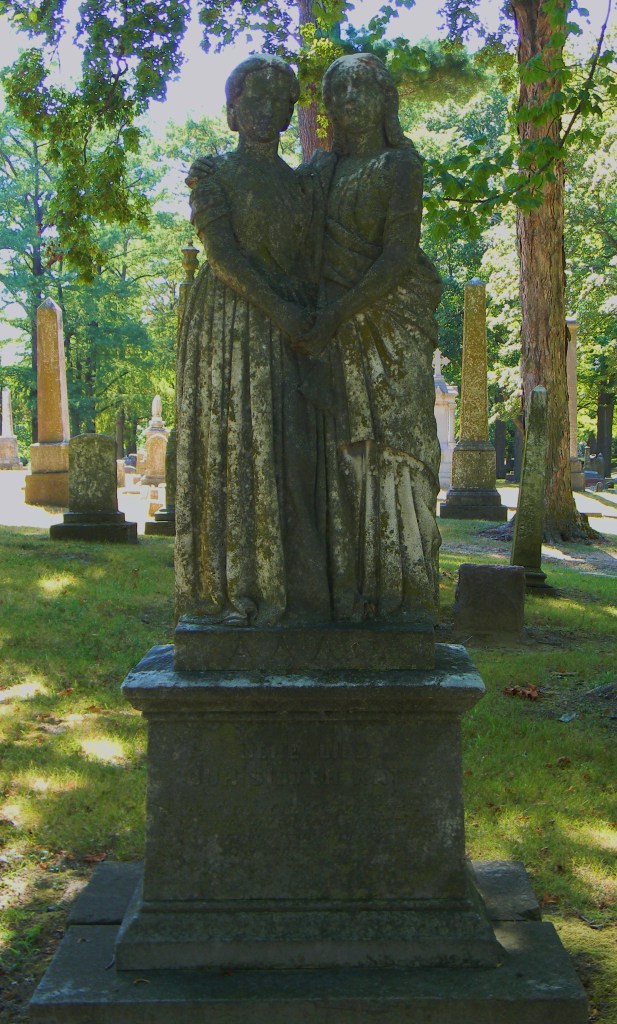
Catherine Tracy clings to her only daughter Kate, who died in 1854 at the age of seventeen.
The neglected lichen-covered monument still vividly evokes a mother’s grief even 150 years later. I imagine Catherine coming to stand at the grave when the statue was new, then ten years later and twenty-five. The stone’s forever. I wonder how her feelings about it changed.

Protestant Cemetery, Rome, Italy

Sculptures always get my camera clicking when I explore a graveyard. Some are just gorgeous. Others tug at my heart stings or get me thinking. There are the ones like Kate Tracy’s that are obviously there for the particular benefit of her grieving family.

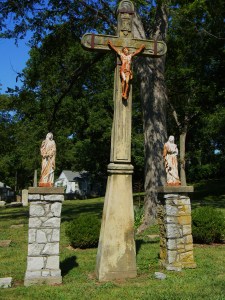
But I also see many less specific, but no less touching guardians and traditional icons.

And then there are the in-your-face, ostentatious monuments. The only thing they say about the deceased is, I WAS RICH! I like those too.

Ordinary stones are great. Heck, I can get excited just reading the names and dates – Did they lose all of their kids in the flu epidemic? – She died in childbirth. He never remarried? – She may have been poor, but somebody sure loved her….

But sculptures can say as much as epitaphs. Maybe not what the mourners intended. Maybe much more. Take a look at nine-year-old Ryan Allen Scott Vanden Broeder’s guardian. This one astounds me. I know there’s a story here, but no amount of googling revealed it. What do you think?

What a Rush!

My fifteen minutes of blogging fame are over.

Thank you to everybody who stopped to “like” or comment. Special thanks to all of you who decided to follow “I Dig Graves.”

I love sharing my passion for all things burial, but it’s especially great exchanging thoughts with all of you.

My blog’s not only a place for me to show off all the great cemeteries I’ve found, but a place to learn, from you, about other fabulous spots around the world. 

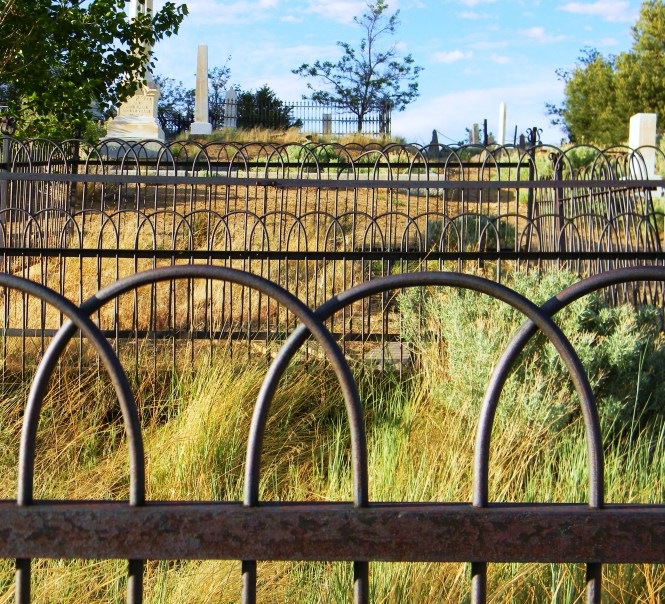
Your comments got some excellent speculation going about why people put little fences around graves.

Marking territory was the most common thought followed closely by fulfilling an impulse to continue protecting lost loved ones. I think both of those are true.

The best explanation for the origins of the practice came from VLS. She postulates that it all started when folks buried their families out on the prairie. “Oh give me a home…where the buffalo roam…where the deer and the antelope play.”

If you didn’t want a cow or bison leaning on the tombstone that you’d put a lot of care and money into, you put a fence around it. This idea made a great deal of sense to me and explained why the practice is most prevalent in the Southwestern U.S. Thanks, VLS!

I’m not a genealogist, though I admire those of you who are up to the challenge. I’m not a photographer. Mostly I just point and shoot in beautiful places. But for reason’s I’ve never been very good at articulating, cemeteries provoke and ground me at the same time.

I invite you to share your fascination too.

Grave Site Fences

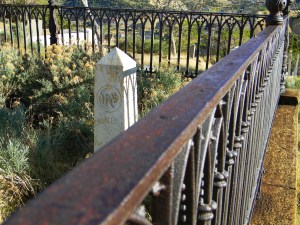
I’ve wondered, and maybe you have too, why people put little fences around graves.

I understand fences around the cemetery itself. You’ve got to define the property somehow. But what’s up with the little grave-yards?

I’ve never seen them in the Northeast or Midwestern United States, but they’re common when you travel south and west.

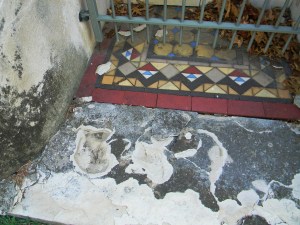
The closest things I’ve come across in the Midwest are these symbolic front steps leading into a family plot.

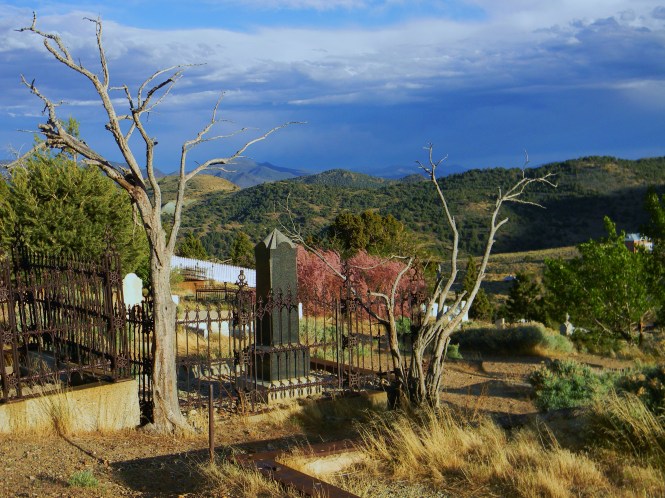
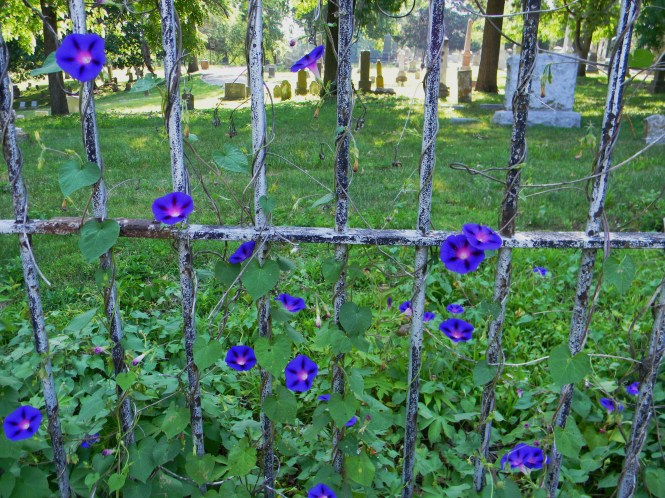
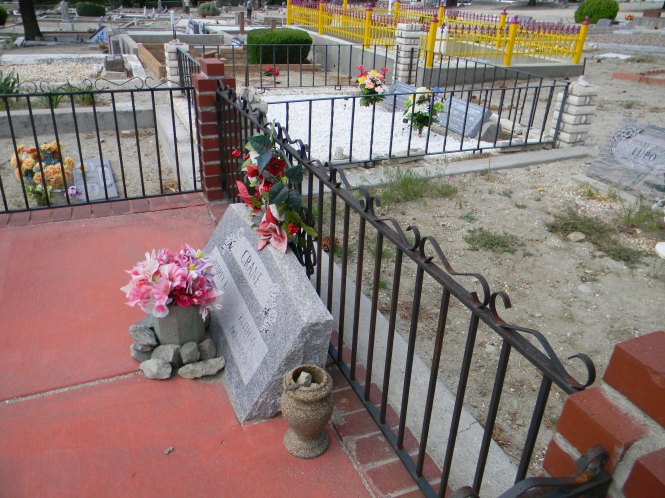
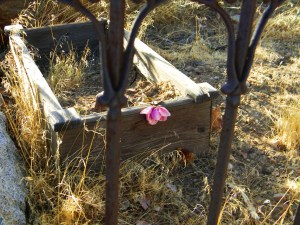
  I’ve seen gorgeous iron work, beautifully laid stone, concrete, wood, brick, and even humble piles of rocks. Is the point to keep something out or keep something in?

Or is it just a need to fully claim the space?

Sometimes the fence is more substantial than the grave marker.

Virginia City, Nevada

Do you live somewhere where it’s traditional to fence in the family plot? I assume the practice was brought over from Europe or maybe up from Central America. Any ideas?


Saint Genevieve, Missouri

I visited this 150-year-old cemetery over a decade ago and got a harsh reality check recently when I went back.

Granted, it was 104° F, a far cry from the balmy spring weather of my first visit. But, that didn’t explain the lack of shadowy, Victorian pathos that I expected.  

I had kind of a Planet of the Apes moment – you know the Statue of Liberty scene? I KNEW I was in the wrong place until I found two graves.

A simple epitaph: John B. Valle, May 3, 1827, August 22, 1869.

Here’s some insight into my taphophelia. Over the decade, I’d elaboratly decorated my memories to make a more appropriate set for the tragic romance I’d invented for John Valle and his consort, Mary St. Gemme.

In Memorium of Mary M. St. Gemme consort of John B. Valle, born February 9 1832, died March 6, 1853, 21 years, 6 days.

The cemetery I “remembered” was crowded with statues and tipped stones all carved in French. Moss hung from the branches of ancient trees and brushed my shoulders as I wandered narrow, winding paths among the graves.

No kidding. That’s exactly what I expected.

Monument to Mary St. Gemme with the simple grave of John Valle at her feet.

Instead of  telling you the story these two graves inspired in my obviously overactive imagination, just look at the pictures and the dates yourself. If you come up with a tale too, then you and I are kindred spirits…or similarly obsessed at least.  Let me know.

Mount Mora, St. Joseph, Missouri

Mount Mora was full of poison ivy and great mausoleums.

Despite having to watch where I put my feet, I had a great time here. I’ve never seen so many mausoleums in one place at least not in the midwestern U.S.

I caught a couple of nice little orbs in this one. Spirits or sun spots, you make the call.

Beautiful patinas, lovely colors. Can you imagine what these monuments must have looked like brand new and gleaming?

I didn’t know the stories behind all the grand monuments, but I did get the scoop on this last one.

According to John Gary Brown in his great book, Soul in the Stone, in the 1880’s Mr. and Mrs Vanderlinde stopped in St. Joseph on their way west. Mrs. V. died in childbirth. Mr. V, without friends or family in the area, built this tomb for his wife. He moved on with their child shortly after completing it. Recently, groundskeepers noticed that the wooden door had deteriorated. After a quick look inside, they bricked over the entrance. What they saw in the tomb was Mrs. V’s preserved body lying on a plank held by two saw horses. She had on her wedding gown.

Sigh.