Grave Site Fences

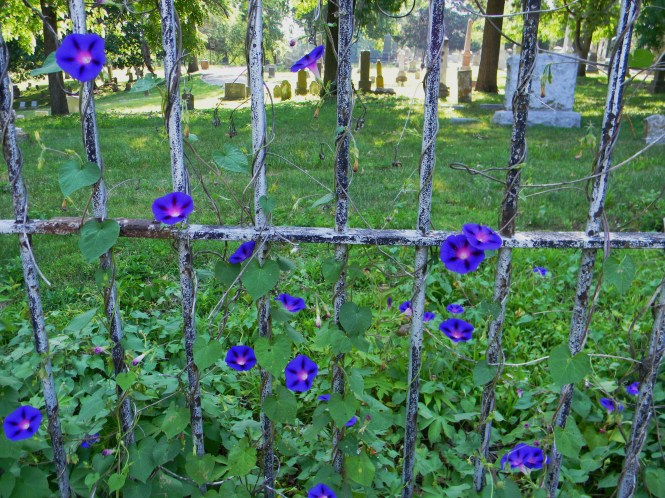
I’ve wondered, and maybe you have too, why people put little fences around graves.

I understand fences around the cemetery itself. You’ve got to define the property somehow. But what’s up with the little grave-yards?
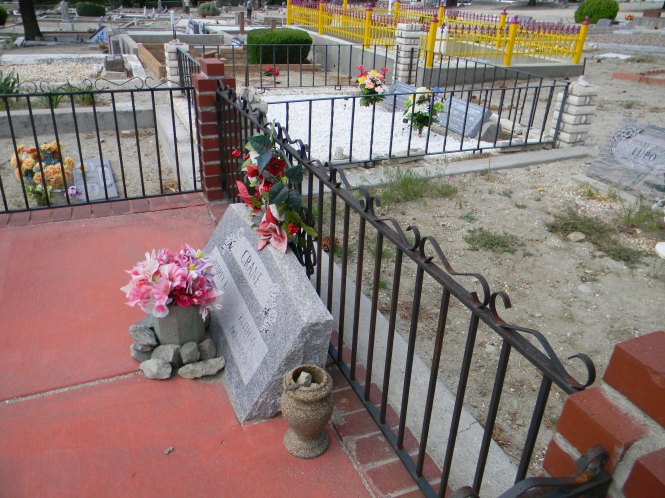
I’ve never seen them in the Northeast or Midwestern United States, but they’re common when you travel south and west.

The closest things I’ve come across in the Midwest are these symbolic front steps leading into a family plot.

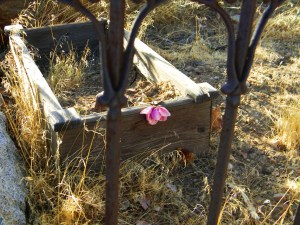
  I’ve seen gorgeous iron work, beautifully laid stone, concrete, wood, brick, and even humble piles of rocks. Is the point to keep something out or keep something in?

Or is it just a need to fully claim the space?
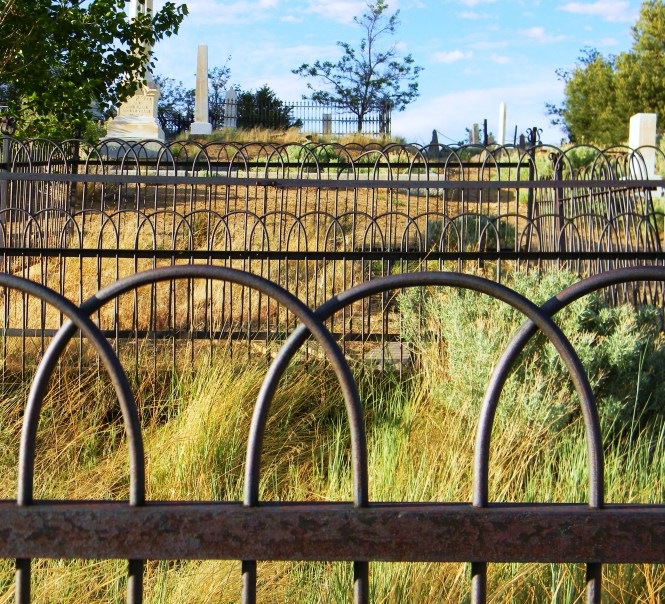
Sometimes the fence is more substantial than the grave marker.

Virginia City, Nevada

Do you live somewhere where it’s traditional to fence in the family plot? I assume the practice was brought over from Europe or maybe up from Central America. Any ideas?


Saint Genevieve, Missouri

I visited this 150-year-old cemetery over a decade ago and got a harsh reality check recently when I went back.

Granted, it was 104° F, a far cry from the balmy spring weather of my first visit. But, that didn’t explain the lack of shadowy, Victorian pathos that I expected.  

I had kind of a Planet of the Apes moment – you know the Statue of Liberty scene? I KNEW I was in the wrong place until I found two graves.

A simple epitaph: John B. Valle, May 3, 1827, August 22, 1869.

Here’s some insight into my taphophelia. Over the decade, I’d elaboratly decorated my memories to make a more appropriate set for the tragic romance I’d invented for John Valle and his consort, Mary St. Gemme.

In Memorium of Mary M. St. Gemme consort of John B. Valle, born February 9 1832, died March 6, 1853, 21 years, 6 days.

The cemetery I “remembered” was crowded with statues and tipped stones all carved in French. Moss hung from the branches of ancient trees and brushed my shoulders as I wandered narrow, winding paths among the graves.

No kidding. That’s exactly what I expected.

Monument to Mary St. Gemme with the simple grave of John Valle at her feet.

Instead of  telling you the story these two graves inspired in my obviously overactive imagination, just look at the pictures and the dates yourself. If you come up with a tale too, then you and I are kindred spirits…or similarly obsessed at least.  Let me know.

Atchison, Kansas

Atchison, Kansas, hometown of Amelia Earhart, sits so close to the mighty Missouri river that you can walk down Main street and dip your toe in.

Floods have come close to wiping out the town several times, but Amelia’s house remains safe, high on the bluffs overlooking the river. 

I spent a long afternoon exploring Mount Vernon cemetery in Atchison a few weeks ago.

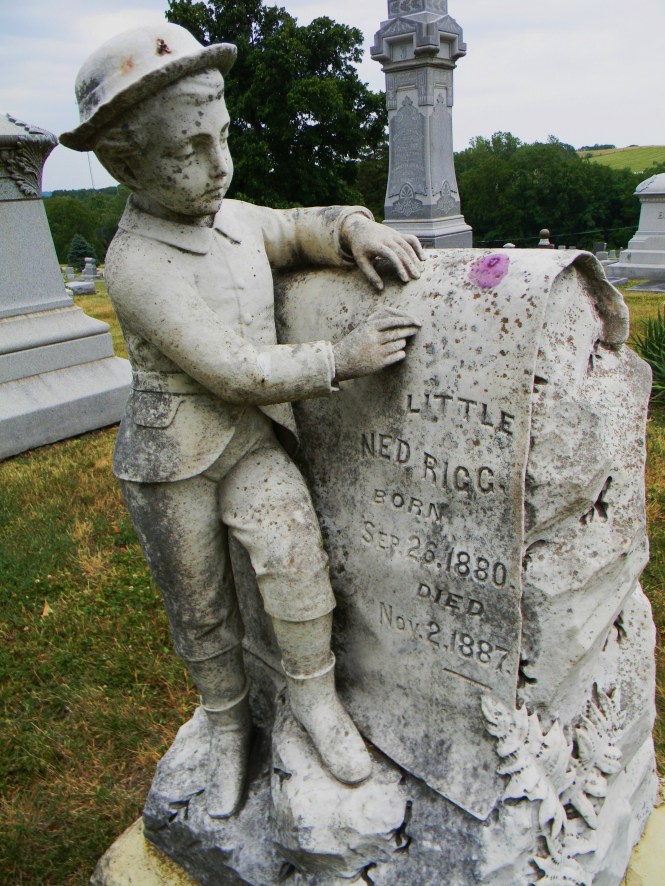
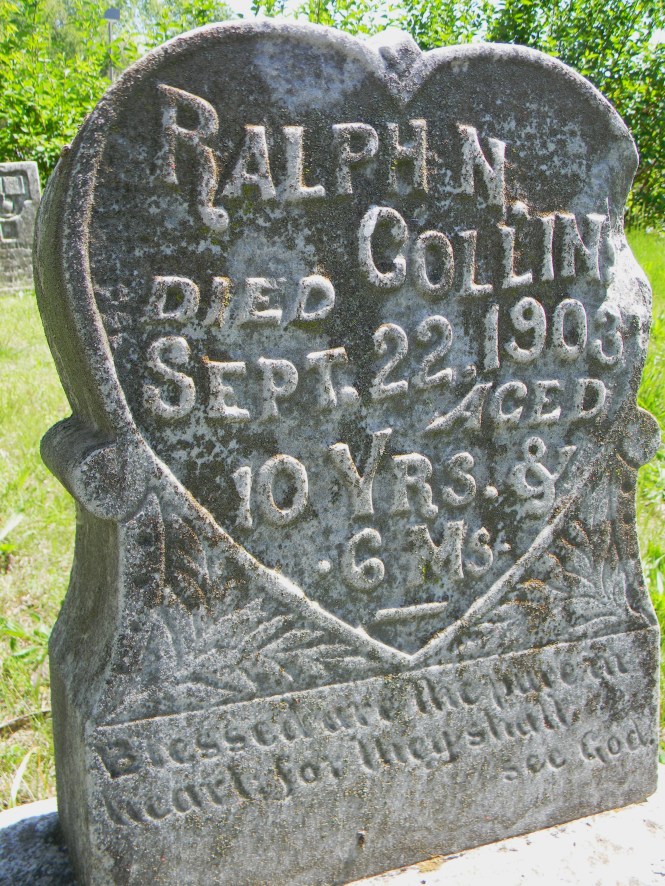
There are several gems like little Ned Rigg. I couldn’t make out what he’s writing. Hopefully, not homework for all eternity. 

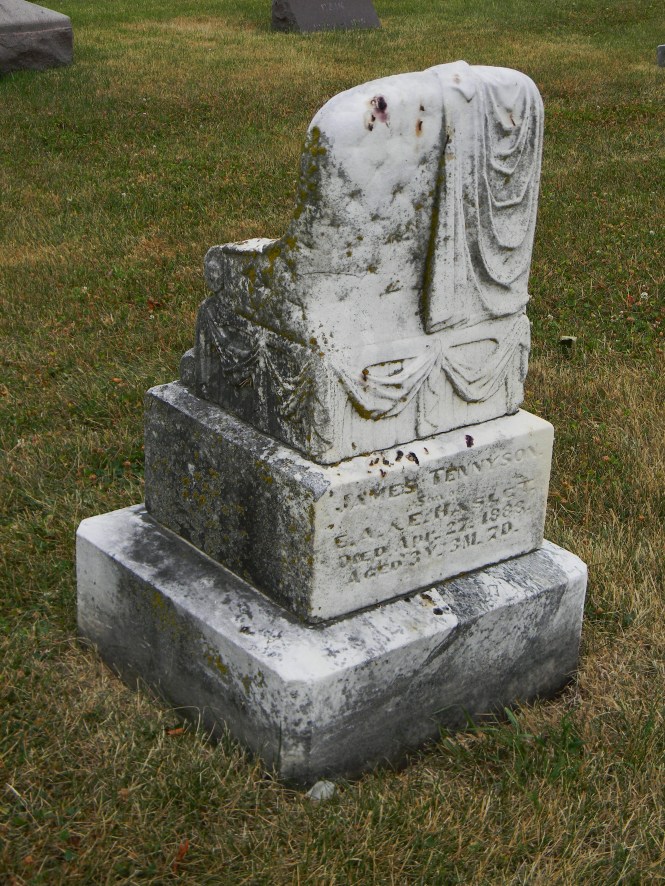
The empty child-sized chair had cast off clothes and toys carved on the front, “Jimmie’s” things. 

There were several intriguing epitaphs, even a Shakespearean quote.

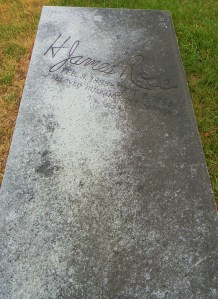
Have you ever seen stones autographed by the deceased? There were several in Mount Vernon.There were MANY more interesting graves I’m not posting. Mt. Vernon’s definitely worth a visit. It’s a few miles outside of town, near the Amelia Earhart Earthworks.

We live everywhere and die everywhere.

I was driving around Leawood, Kansas, kind of lost, I’ll admit.

I stopped at a big, fancy grocery store for the salad bar and directions. In the middle of the parking lot, like an oasis in a sea of asphalt, was this tiny cemetery.

Once through the gate, traffic noise seemed to fade even with suburban jungle all around. I’d stepped back in time.

Two young men’s graves told me how far back.

When I closed my eyes, I could picture the cool, peaceful spot these pioneers must have chosen. A small stand of trees in the wide open prairie.

Not in their wildest dreams could they have imagined what it would be like here a century later.

The whole place looked neglected. I wondered if anybody still mowed in the summer.

There’s a history of volunteer maintenance at the Linwood Pioneer Cemetery, at least until recently.

This sign was posted on the gate.

Does anybody reading this live near 95th Street and Mission Road in Leawood, Kansas?  What’s the end of this story?

Westphalia, Missouri

The discordant mix of highway noise, turtledoves and church bells lent a surreal quality to my visit to this little cemetery.

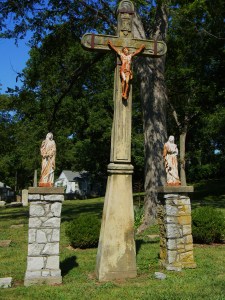
It was one of those slam on the brakes and make a right, no time for turn signals kind of stops. Ever had one of those? Two-lane, State Highway 63 twists through the eastern edge of the Ozark Mountains in southern Missouri. About 20 miles south of the capital, Jefferson City, the landscape gets more and more rural. I passed through several tiny towns before the tall, marble crucifix that marked this graveyard called my name.

I parked in a large, gravel lot in front of an auto repair shop right beside the highway. A broken down school bus sat in one corner like it’d been there for years and would be for more. A well used tow truck was parked in front of the boxy, aluminum sided shop.

The Westphalia cemetery sits right next to it on a hillside gently sloping up toward a church with a high, pointed white steeple, the source of the tolling bells.

Twilight added to a sense of being slightly off-center to reality here. My step off the gravel and onto the cemetery’s thick, well-tended lawn was like a step out of time.

Icouldn’t translate the language on the markers.

I don’t speak a word of German. Even the street signs in tiny Westphalia are printed in two languages. The flowing script on the porcelain placards was beautiful though.


Iron work crosses spoke to the poverty and austerity of the folks who settled here.

I got the feeling from looking around that not much had changed.