What a Rush!

My fifteen minutes of blogging fame are over.

Thank you to everybody who stopped to “like” or comment. Special thanks to all of you who decided to follow “I Dig Graves.”

I love sharing my passion for all things burial, but it’s especially great exchanging thoughts with all of you.

My blog’s not only a place for me to show off all the great cemeteries I’ve found, but a place to learn, from you, about other fabulous spots around the world. 

Your comments got some excellent speculation going about why people put little fences around graves.
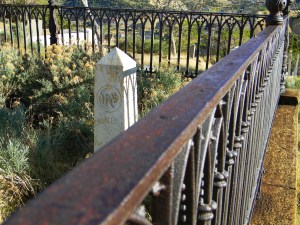
Marking territory was the most common thought followed closely by fulfilling an impulse to continue protecting lost loved ones. I think both of those are true.

The best explanation for the origins of the practice came from VLS. She postulates that it all started when folks buried their families out on the prairie. “Oh give me a home…where the buffalo roam…where the deer and the antelope play.”
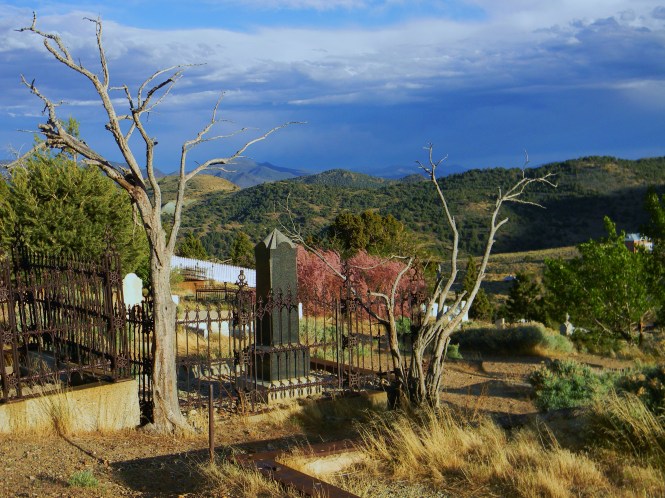
If you didn’t want a cow or bison leaning on the tombstone that you’d put a lot of care and money into, you put a fence around it. This idea made a great deal of sense to me and explained why the practice is most prevalent in the Southwestern U.S. Thanks, VLS!

I’m not a genealogist, though I admire those of you who are up to the challenge. I’m not a photographer. Mostly I just point and shoot in beautiful places. But for reason’s I’ve never been very good at articulating, cemeteries provoke and ground me at the same time.

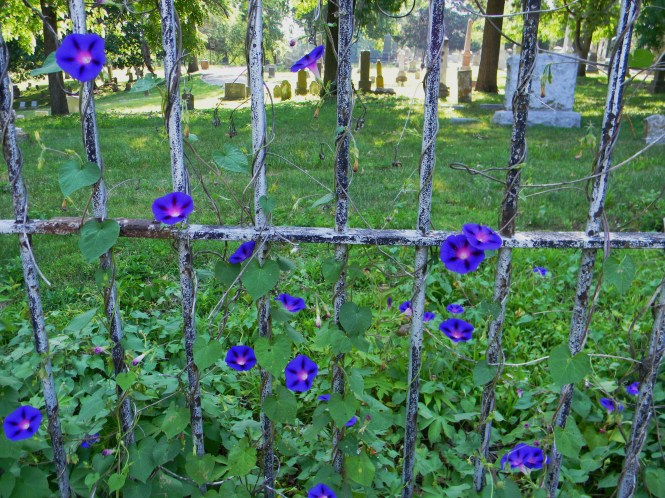
I invite you to share your fascination too.

Grave Site Fences

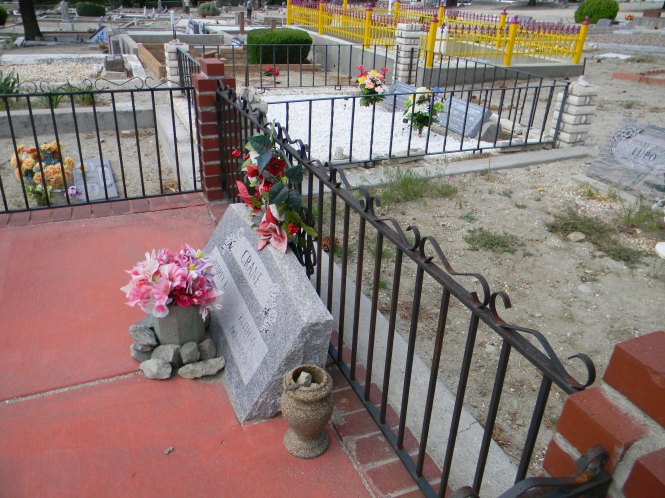
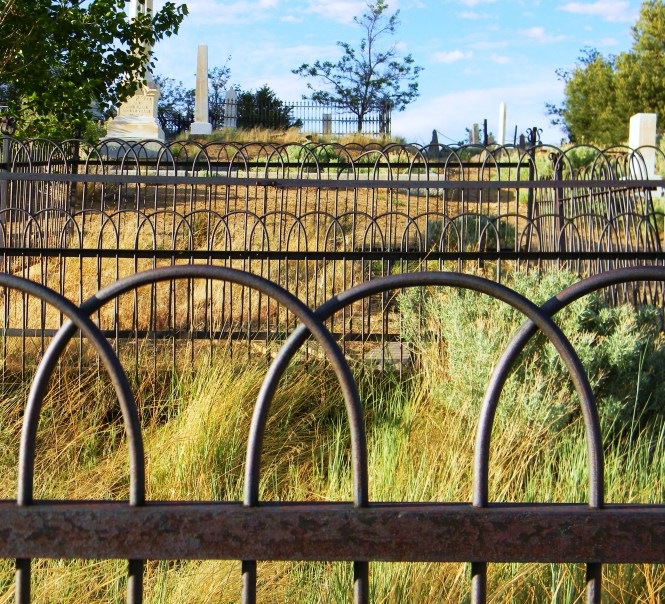
I’ve wondered, and maybe you have too, why people put little fences around graves.

I understand fences around the cemetery itself. You’ve got to define the property somehow. But what’s up with the little grave-yards?

I’ve never seen them in the Northeast or Midwestern United States, but they’re common when you travel south and west.

The closest things I’ve come across in the Midwest are these symbolic front steps leading into a family plot.

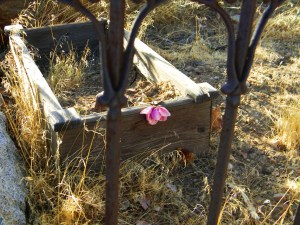
  I’ve seen gorgeous iron work, beautifully laid stone, concrete, wood, brick, and even humble piles of rocks. Is the point to keep something out or keep something in?

Or is it just a need to fully claim the space?

Sometimes the fence is more substantial than the grave marker.

Virginia City, Nevada

Do you live somewhere where it’s traditional to fence in the family plot? I assume the practice was brought over from Europe or maybe up from Central America. Any ideas?


Atchison, Kansas

Atchison, Kansas, hometown of Amelia Earhart, sits so close to the mighty Missouri river that you can walk down Main street and dip your toe in.

Floods have come close to wiping out the town several times, but Amelia’s house remains safe, high on the bluffs overlooking the river. 

I spent a long afternoon exploring Mount Vernon cemetery in Atchison a few weeks ago.

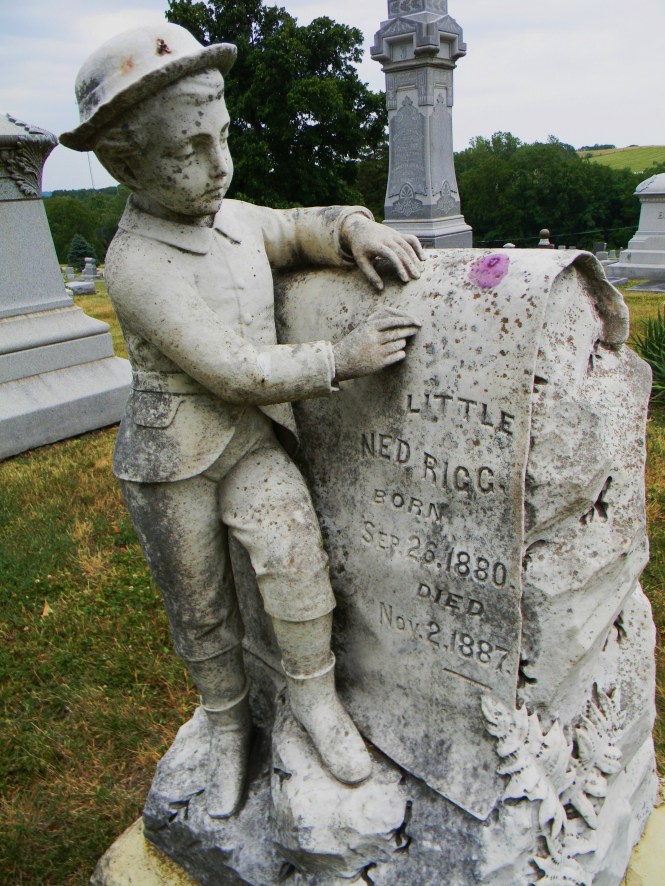
There are several gems like little Ned Rigg. I couldn’t make out what he’s writing. Hopefully, not homework for all eternity. 

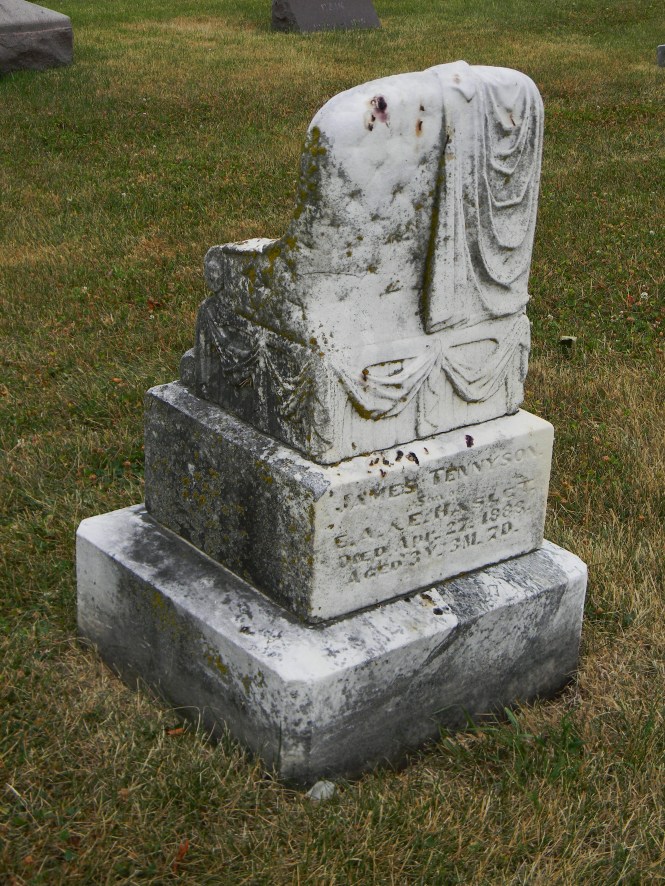
The empty child-sized chair had cast off clothes and toys carved on the front, “Jimmie’s” things. 

There were several intriguing epitaphs, even a Shakespearean quote.

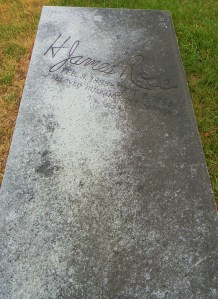
Have you ever seen stones autographed by the deceased? There were several in Mount Vernon.There were MANY more interesting graves I’m not posting. Mt. Vernon’s definitely worth a visit. It’s a few miles outside of town, near the Amelia Earhart Earthworks.

Hiawatha, Kansas

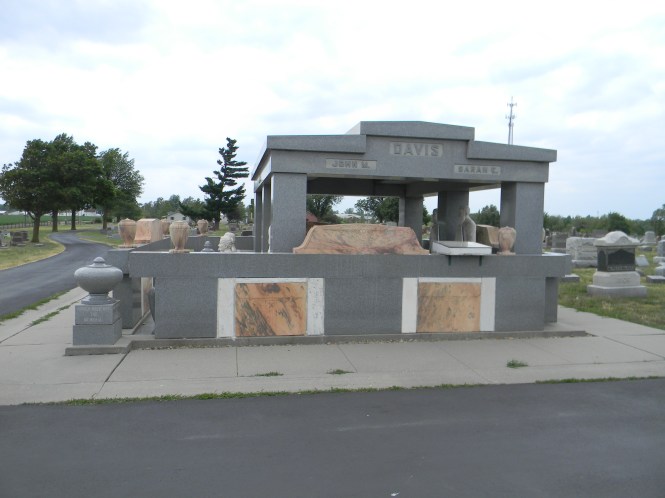
To say that the Davis memorial in Mount Hope Cemetery is off the beaten path doesn’t quite do its location justice.

Hiawatha, Kansas is in the heart of America’s farm country. Gorgeous, but remote.

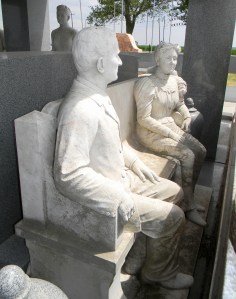
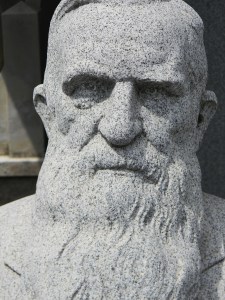
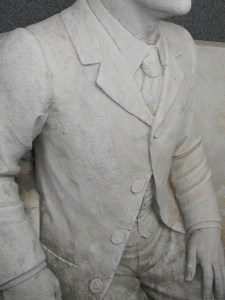
John and Sarah Davis’s strange memorial was worth the drive. I’ve never seen anything like it. Thirteen marble statues plus urns, marble walls and roof depict every stage of the couple’s fifty year marriage.

John commissioned the work in 1930 when Sarah died. Sculptors in Carrara, Italy carved the stones until 1940.

According to legend, the townsfolk were pretty miffed that John would spend that kind of money, nearly all his family fortune, when times were so hard. 1930 was the middle of the Great Depression, but he had a point to make.

Sarah’s family hadn’t approved of their marriage. The couple was childless and John had no intention of his wife’s relatives getting a penny when he passed away.

The story makes sense. There’s waaaaay too much marble squashed onto one little burial plot. It looks like John kept trying to find more ways to spend away his money. That marble roof must weigh 50 tons! And it’s a b*#!@ to photograph!  Somebody with a better camera than mine needs to make the trek to Hiawatha and do this monument justice.

To me, the site ends up being not only a monument to a man who loved his wife, but to human foibles as well.

We live everywhere and die everywhere.

I was driving around Leawood, Kansas, kind of lost, I’ll admit.

I stopped at a big, fancy grocery store for the salad bar and directions. In the middle of the parking lot, like an oasis in a sea of asphalt, was this tiny cemetery.

Once through the gate, traffic noise seemed to fade even with suburban jungle all around. I’d stepped back in time.
Two young men’s graves told me how far back.

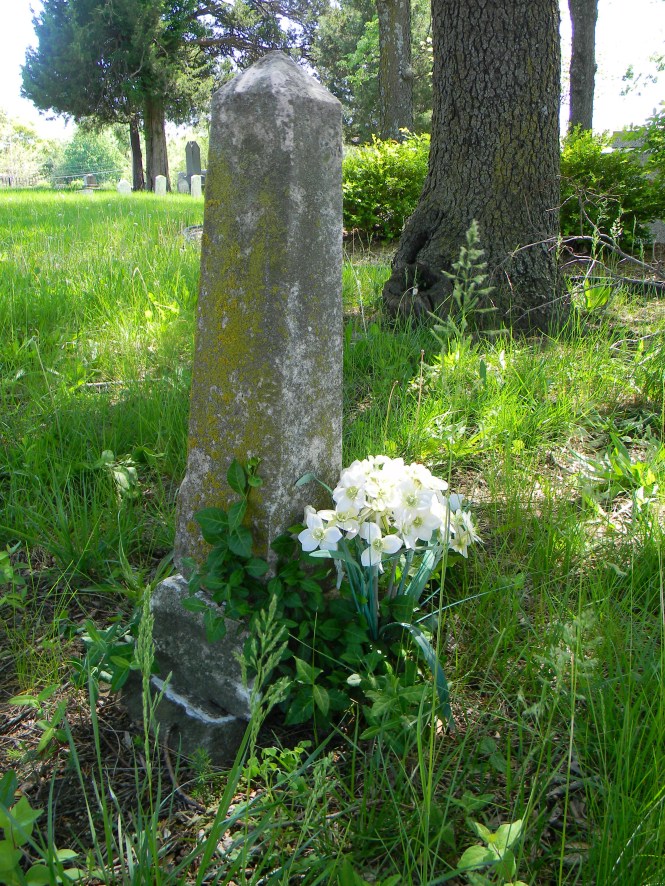
When I closed my eyes, I could picture the cool, peaceful spot these pioneers must have chosen. A small stand of trees in the wide open prairie.

Not in their wildest dreams could they have imagined what it would be like here a century later.
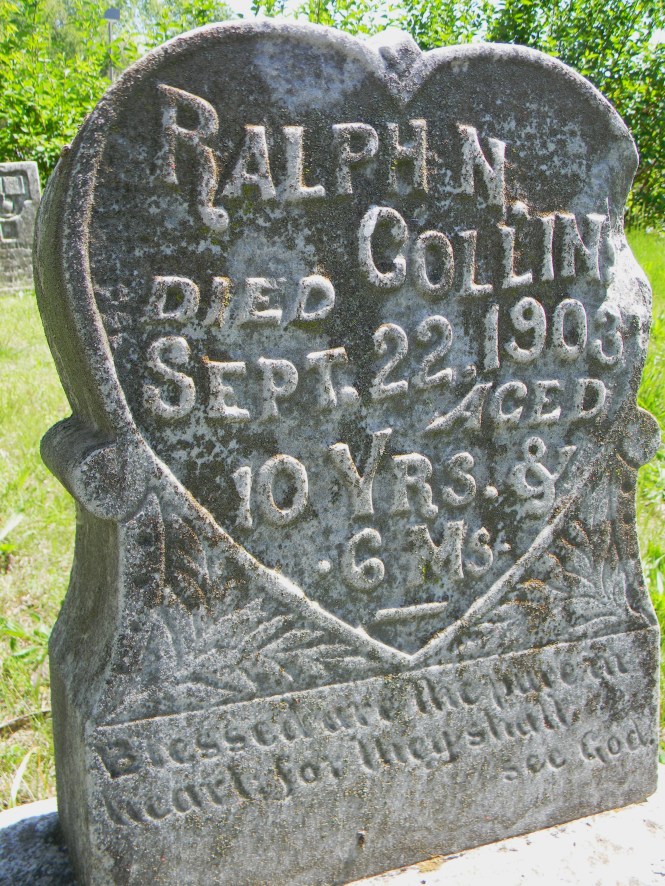
The whole place looked neglected. I wondered if anybody still mowed in the summer.

There’s a history of volunteer maintenance at the Linwood Pioneer Cemetery, at least until recently.

This sign was posted on the gate.

Does anybody reading this live near 95th Street and Mission Road in Leawood, Kansas?  What’s the end of this story?