We live everywhere and die everywhere.

I was driving around Leawood, Kansas, kind of lost, I’ll admit.

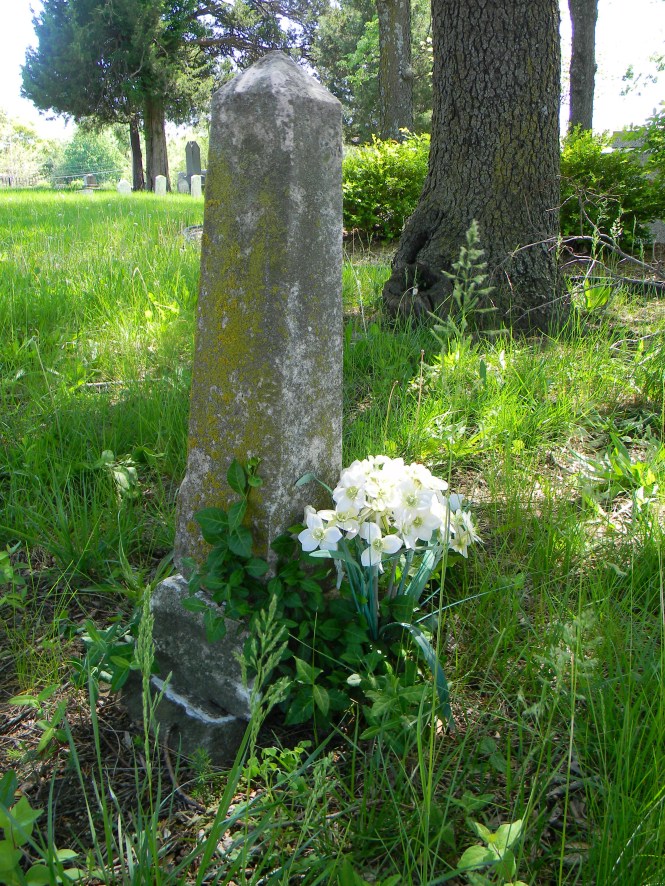
I stopped at a big, fancy grocery store for the salad bar and directions. In the middle of the parking lot, like an oasis in a sea of asphalt, was this tiny cemetery.

Once through the gate, traffic noise seemed to fade even with suburban jungle all around. I’d stepped back in time.

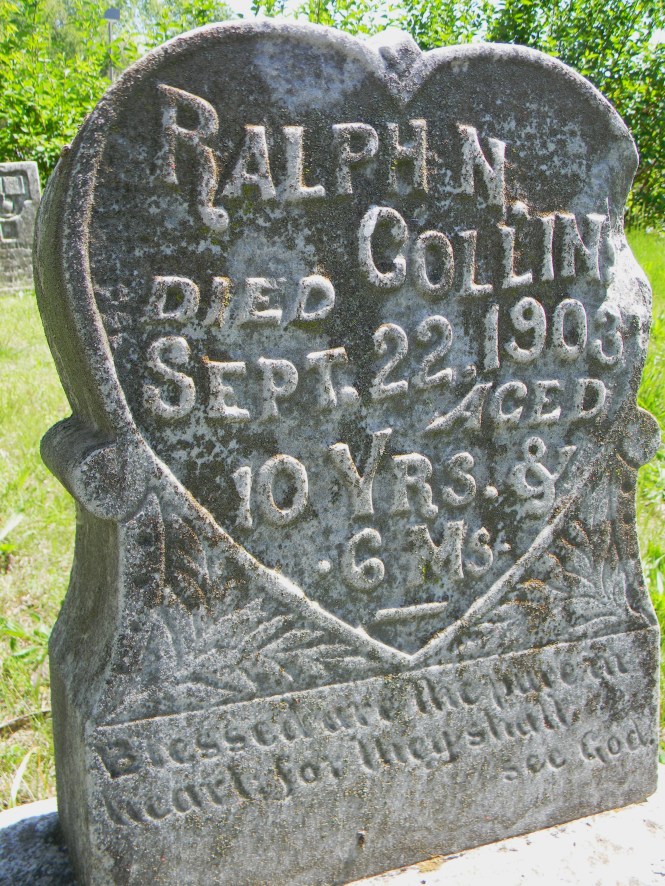
Two young men’s graves told me how far back.

When I closed my eyes, I could picture the cool, peaceful spot these pioneers must have chosen. A small stand of trees in the wide open prairie.

Not in their wildest dreams could they have imagined what it would be like here a century later.

The whole place looked neglected. I wondered if anybody still mowed in the summer.

There’s a history of volunteer maintenance at the Linwood Pioneer Cemetery, at least until recently.

This sign was posted on the gate.

Does anybody reading this live near 95th Street and Mission Road in Leawood, Kansas?  What’s the end of this story?

Give me your best shots!


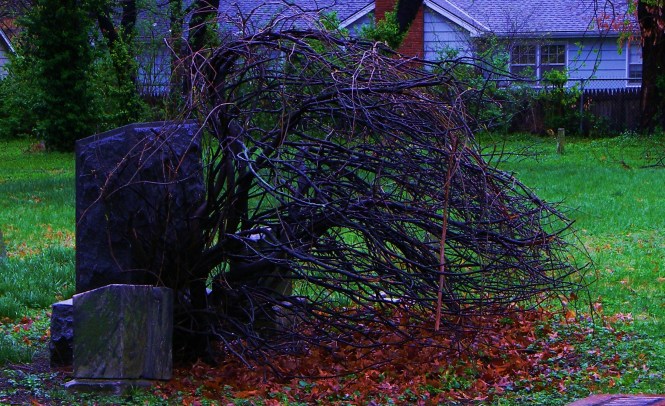
I wouldn’t say this is my best shot photographically speaking, but it’s one of my favorite tombstones. I wondered as I looked at it from several angles whether someone had pruned the bush into these massive black wings. There were no clues that I could see.   Maybe in the summer glorious leafy wings sprout from the stone. Or maybe the illusion only works with bare branches. I’ll have to go back and see.

Give me your best shots! 

I’ve seen some great tombstones on blogs out there lately. If you’ve taken a graveyard photo that you’re particularly proud of, post a comment and tell me where it is.  I’ll try out the “reblog” button.


Westphalia, Missouri

The discordant mix of highway noise, turtledoves and church bells lent a surreal quality to my visit to this little cemetery.

It was one of those slam on the brakes and make a right, no time for turn signals kind of stops. Ever had one of those? Two-lane, State Highway 63 twists through the eastern edge of the Ozark Mountains in southern Missouri. About 20 miles south of the capital, Jefferson City, the landscape gets more and more rural. I passed through several tiny towns before the tall, marble crucifix that marked this graveyard called my name.

I parked in a large, gravel lot in front of an auto repair shop right beside the highway. A broken down school bus sat in one corner like it’d been there for years and would be for more. A well used tow truck was parked in front of the boxy, aluminum sided shop.

The Westphalia cemetery sits right next to it on a hillside gently sloping up toward a church with a high, pointed white steeple, the source of the tolling bells.

Twilight added to a sense of being slightly off-center to reality here. My step off the gravel and onto the cemetery’s thick, well-tended lawn was like a step out of time.

Icouldn’t translate the language on the markers.

I don’t speak a word of German. Even the street signs in tiny Westphalia are printed in two languages. The flowing script on the porcelain placards was beautiful though.


Iron work crosses spoke to the poverty and austerity of the folks who settled here.

I got the feeling from looking around that not much had changed.

A Rare Night Time Visit

All Hallows Eve is a special time of year at the cemetery in Eureka Springs, Arkansas.

That month and that month only, visitors can tour the grounds at night. If you’re a taphophile like me, you know that legal night-time visits are an opportunity not to be missed.

The local historical society gamely puts on Halloween fundraising tours to keep this beautiful, old cemetery alive and well. As groups wind their way through the grounds, costumed actors bring the people in the graves to life. No flashlights allowed. We walked by lantern and torch-light, each curve in the path ahead pitch dark until we rounded it, the crunch of gravel and the murmur of hushed voices the only sounds.

I wondered at the steely nerves of the actors who sat alone in the dark during the long gaps between tour groups. I bet they had a few interesting stories of their own.


The volunteers did a great job; respectful of the dead, historically accurate. This was NOT a chainsaw massacre spookhouse tour. Still, there’s a natural creep factor that I love in any cemetery at night. Although it was clear and cold, not all of my shivers came from the chill in the air.

Earlier, the guides showed us pictures in which lucky photographers had captured “spirit orbs” floating over graves.

They encouraged us to take our own photos. Just point the camera into the pitch darkness, click, flash, and hope you got something. I kind of hit the spirit orb jackpot.

See the orbs hovering in the upper left corner?

If you visit Eureka Springs, go in October. The automn colors in the rolling hills are spectacular, and of course, you have to take the tour.

Cemetery Musings

I’ll tell you about my first real funeral.
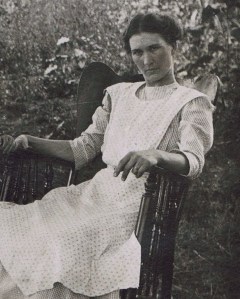
I was little, seven or eight. My great grandma Essie passed away.

Essie lived the last decade or so of her life in a corner of Colorado where the flat plains were sown with wheat fields stretching as far as the eye could see. The Rocky Mountains didn’t even smudge the western horizon.

Julesburg is so small you could ride a bike across town in the time it takes to sing three verses of the Star Spangled Banner.

I don’t remember the service itself except that it happened in a little church within a block of my grandmother’s house on a gorgeous spring day.


Afterwards, I walked down the sidewalk with my sisters and parents, and I started to cry. The sun was a warm kiss against my skin. A cool, silky breeze soothed away its heat. Birds sang. The scent of lilacs wafted on the air.

It broke my heart.

Great Grandma Essie would never experience any of this again.

I started a list in my head of all the other wonderful things she’d miss: Christmas morning, Humming Birds, me…. I cried harder.

I remember sitting on the edge of the bed in my grandmother’s pink guest room, still crying, Mom sitting beside me.

Despite weekly Sunday school classes, I had no concept of a place Grandma Essie could go that could possibly be better than this. Wouldn’t she miss us? Wouldn’t she be all alone? I don’t envy my mom that day. Though I don’t remember her words, I recall a sense of mild desperation in the arm she wrapped around me.

Part of my distress was the idea that not everyone got to go to that wonderful place called heaven that Mom and Sunday school tried to describe. My teachers didn’t preach hell and brimstone, not to kids my age, but you hang around at church long enough and even seven-year-olds hear rumors.

At 92, Great Grandma Essie was a grumpy, old woman. She’d had a hard life, been abandoned by two husbands, raised two children alone on a farm in the Midwest in the days before electricity and cars and Zoloft. She’d sent both of her kids, daughter and son, to college.  She was a tough, old broad. To me, she’d always been a slightly scary, very fragile, old lady who wore sagging stockings and slept in her rocking chair when we visited. She died in her sleep, alone, in a gloomy, cramped apartment that smelled funny. Would she make it to heaven?

“Of course,” my mother said, gently squeezing my shoulder as I sobbed.

“But, how do you know?”

That’s the question, isn’t it?